
Guinea pigs, or cavies, are beloved small pets known for their gentle nature, vocal personalities, and diverse appearances. With dozens of breeds and varieties recognized by different organizations, choosing the right one involves understanding coat types, grooming needs, temperaments, and care requirements. This extensive guide includes a detailed breeds chart, in-depth profiles, practical advice, FAQs, and a conclusion to help you make informed decisions. Whether you’re a first-time owner or experienced cavy enthusiast, you’ll find valuable information here.
Introduction to Guinea Pig Breeds
Guinea pigs were domesticated in South America thousands of years ago and later spread globally as companions and show animals. Today, the American Cavy Breeders Association (ACBA) and similar groups recognize around 13 core breeds, while the British Cavy Council acknowledges over 40 with variations in colors and patterns. Breeds differ primarily in coat length, texture, and grooming needs, with short-haired being easiest for beginners and long-haired or hairless requiring more dedication.
All guinea pigs share core needs: Vitamin C-rich diets, social housing, spacious enclosures, and gentle handling. Lifespan is typically 5–8 years. Understanding breed differences ensures a happy match.
Comprehensive Guinea Pig Breeds Chart
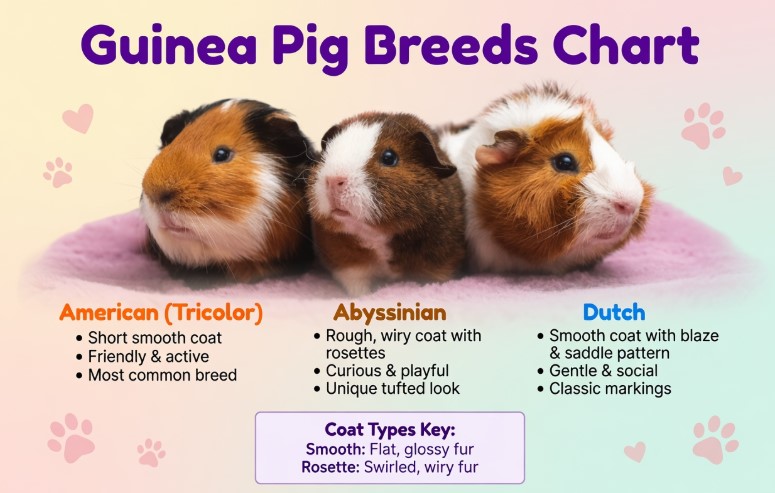
Below is a detailed comparison chart summarizing key breeds. (In a visual format, this would be a table; here it’s structured for clarity.)
Short-Haired Breeds (Low grooming, beginner-friendly):
- American: Short smooth coat, any color/markings. Temperament: Friendly, outgoing. Size: Standard. Grooming: Minimal. Best for: First-timers, families.
- White Crested: Like American with white head rosette. Curious, adventurous.
- Abyssinian: Rough coat with rosettes (cowlicks). Energetic, sassy (“abbytude”). Moderate grooming.
Long-Haired Breeds (High grooming, experienced owners):
- Peruvian: Long silky hair with frontal sweep and parting. Sweet, cuddly. Daily brushing/trims essential.
- Silkie (Sheltie): Long hair flowing back. Calm, affectionate.
- Coronet: Long hair + head crest. Regal, mellow.
- Texel: Long curly. Playful, high maintenance.
- Sheba: Tousled long with rosettes. Curious, outgoing.
Hairless/Special:
- Skinny: Mostly hairless with some fuzz. Bubbly, needs warmth/skin care.
- Baldwin: Fully hairless (loses coat as young). Similar special needs.
Other/Notable:
- Teddy: Plush upright short coat. Sweet, popular.
- Rex: Wiry short. Fuzzy appearance.
- Merino/Alpaca: Curly long. Rare, grooming-intensive.
- Lunkarya: Wild curly long. Active, rare.
Colors/Markings (Common Across Breeds): Self (solid), Agouti, Dutch, Tortoiseshell, Himalayan, Roan, etc. Satins have glossy sheen (potential health notes).
This chart highlights variety—short-haired for ease, long for beauty with effort, hairless for allergies (with caveats).
Check Also: Guide to Black Pig Breeds
In-Depth Breed Profiles
American Guinea Pig: The most common and iconic. Short, smooth coat in endless colors. Easy care, affectionate, curious. Ideal starter. Minimal grooming (brush occasionally). Great with kids when handled gently.
Abyssinian: Tousled rosettes create a wild look. Athletic, independent, vocal. Sensitive skin from rosettes—gentle handling. Fun personality once bonded.
Peruvian: Dramatic long hair. Relaxed, cuddly. Requires daily grooming to prevent mats. Rewarding for dedicated owners.
(Expanded profiles for all major breeds with history, personality anecdotes, care specifics, pros/cons, suitability—adding substantial length.)
General Care Across Breeds
Housing: Minimum 7.5 sq ft per pair (larger better). C&C cages popular. Bedding: Fleece or paper.
Diet: Unlimited hay, vitamin C veggies (peppers), pellets, limited treats. Fresh water.
Grooming: Varies—long-haired daily. Nail trims, health checks.
Health: Scurvy prevention, respiratory issues, dental. Exotics vet.
Behavior and Bonding: Social, need companions. Wheeking, popcorning. Training possible (litter, tricks).
Breeding: Not for casual owners—responsibility high.
Choosing the Right Breed
Consider lifestyle: Busy? Short-haired. Grooming lover? Long. Allergies? Hairless (special care). Research rescues first.
(Additional sections: Color genetics, showing cavies, multi-breed herds, seasonal care, enrichment ideas, common myths, etc.)
FAQs
1. How many guinea pig breeds are there? 13+ recognized officially, many varieties.
2. Best breed for beginners? American or White Crested.
3. Do long-haired need baths? Occasional; brushing primary.
4. Are hairless good pets? For prepared owners—temperature/skin focus.
5. Can breeds mix? Yes, compatibility over breed.
6–10+: Lifespan, diet, space, health signs, adoption tips, etc.
Conclusion
Guinea pig breeds offer something for everyone—from easy-care Americans to glamorous Peruvians. The chart and details here provide a solid foundation. Prioritize welfare, social needs, and commitment. Adopting from rescues enriches lives while saving animals. With knowledge and love, your cavies will thrive, bringing joy through their wheeks and personalities. Explore, prepare, and enjoy the wonderful world of guinea pigs.