
Radishes are a crisp, peppery root vegetable commonly found in salads, side dishes, and snacks. Their bright color, satisfying crunch, and low calorie count make them popular with people looking for healthy options. If your dog has ever eyed a radish on your plate or stolen a piece from the cutting board, you may wonder whether this vegetable is safe to share. The short answer is yes—dogs can eat radishes in moderation. The radish root is non-toxic, and many veterinary sources consider it a safe occasional treat when prepared correctly. However, as with most human foods, there are important guidelines around portion size, preparation, and individual tolerance.
This comprehensive guide explains everything dog owners need to know about feeding radishes: nutritional profile, potential benefits, risks (including why the greens should be avoided), proper preparation methods, recommended serving sizes by dog weight, special considerations for certain health conditions, and practical tips for introducing this vegetable. By the end, you will understand when radishes can be a fun, low-calorie addition to your dog’s treat rotation and when they are best left off the menu.
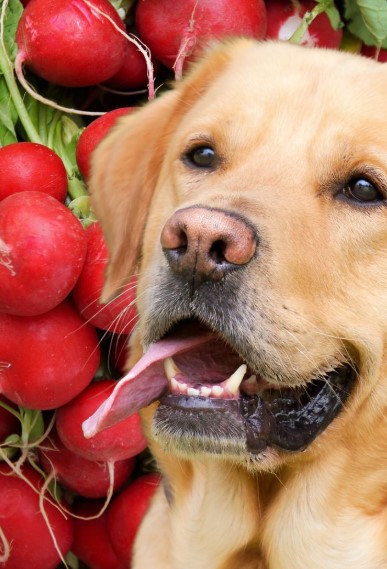
Are Radishes Safe for Dogs?
Yes. Major veterinary resources, including PetMD and the American Kennel Club, confirm that the radish root (the bulb) is safe for dogs when offered in small amounts. Radishes belong to the Brassicaceae family, which also includes broccoli, kale, and cabbage—vegetables that are generally regarded as non-toxic to dogs in moderation.
The key distinction is between the root and the leafy greens. The root is the part considered safe. The leaves and stems can irritate a dog’s gastrointestinal tract and are best avoided. Additionally, any radish preparation that includes salt, oil, butter, vinegar, onion, garlic, or other seasonings is unsuitable. Horseradish, despite the similar name, is a different plant and should not be given to dogs.
Radishes are not a required part of a dog’s diet. A complete and balanced commercial dog food already supplies the necessary nutrients. Radishes function best as an occasional low-calorie treat or food topper for dogs that enjoy the flavor and texture.
Nutritional Profile of Radishes
Radishes are approximately 95% water, making them hydrating and very low in calories—roughly 16 calories per 100 grams. They provide:
- Dietary fiber, which supports digestive regularity
- Vitamin C, an antioxidant (dogs synthesize their own vitamin C, so dietary amounts are a minor bonus)
- Potassium, which supports muscle and nerve function
- Small amounts of calcium, folate, and other micronutrients
- Natural compounds found in cruciferous vegetables that may offer mild antioxidant effects
Because dogs typically eat only tiny portions of radish, the overall nutritional contribution remains modest. The primary appeal is the low calorie density and crunchy texture rather than significant vitamin or mineral delivery.
Potential Benefits for Dogs
Low-calorie treat option For dogs that need to manage weight or simply enjoy chewing, a few small pieces of radish can provide oral stimulation without many extra calories.
Fiber for digestion The fiber content may help promote regular bowel movements in some dogs when introduced gradually.
Hydration support The high water content can contribute a small amount of moisture, which is helpful on warm days or for dogs that do not drink large volumes of water.
Variety and enrichment Offering safe novel textures and flavors can add interest to a dog’s routine, provided the dog actually likes the peppery taste.
These benefits are secondary. Radishes should never replace balanced dog food or be relied upon as a primary source of any nutrient.
Risks and Cautions
Radish greens (leaves) The leafy tops contain higher levels of compounds that can irritate the stomach lining. Feeding the greens may lead to vomiting, diarrhea, or general gastrointestinal upset. Always remove and discard the leaves before offering the root.
Digestive upset from excess Even the root can cause gas, loose stools, or mild stomach discomfort if a dog eats too much at once. The fiber and natural sulfur-containing compounds (glucosinolates) in cruciferous vegetables are the usual culprits. Introduce radishes slowly and keep portions small.
Choking and obstruction hazard Whole radishes or large chunks pose a choking risk, especially for small dogs or dogs that gulp food without thorough chewing. Always dice, grate, or thinly slice the radish into appropriately sized pieces.
Peppery flavor Many dogs dislike the sharp, spicy taste of radishes and will simply refuse them. This is not a problem—there is no need to force a food the dog does not enjoy.
Oxalate content Like some other vegetables, radishes contain oxalates. Dogs with a history of calcium oxalate urinary stones or crystals should generally avoid high-oxalate foods or only receive them under veterinary guidance.
Seasoned or prepared radishes Pickled radishes, radish dishes containing onion or garlic, salted or buttered radishes, and any commercially prepared radish products with additives are unsafe. Onion and garlic are toxic to dogs; excess salt can cause problems; and oils or spices may irritate the digestive system.
Horseradish Horseradish is not a true radish and contains compounds that can be irritating or harmful. Do not feed horseradish to dogs.
How to Prepare Radishes Safely for Dogs
- Choose fresh, firm radishes. Common red globe radishes, white varieties, daikon, or watermelon radishes are all acceptable as long as they are plain.
- Wash thoroughly under running water to remove dirt and any surface residues.
- Trim off and discard all leaves, stems, and root fibers.
- Cut the radish into very small pieces, thin slices, or grate it. Size should match your dog’s chewing ability—tiny cubes for small breeds, slightly larger but still manageable pieces for big dogs.
- Serve raw for maximum crunch or lightly steam/boil without any added ingredients if your dog prefers a milder texture. Cooking can reduce some of the peppery bite.
- Offer plain only—no salt, oil, butter, seasonings, or dressings.
- Start with a very small test portion and monitor for 24 hours.
Store any unused prepared radish in the refrigerator and use within a day or two for best quality.
Recommended Portion Sizes
Treats, including vegetables, should make up no more than 10% of a dog’s daily caloric intake. Because radishes are low in calories, volume is more of a concern for digestive tolerance than calorie load. General starting guidelines include:
- Extra-small dogs (under 20 pounds): A ¼-inch cube or a few thin shavings
- Small dogs (20–30 pounds): A ½-inch cube or equivalent
- Medium dogs (30–50 pounds): A 1-inch cube or a couple of thin slices
- Large dogs (50–90 pounds): One to two 1-inch cubes
- Extra-large dogs (over 90 pounds): Up to a few small cubes
These amounts are approximate. Offer radishes only occasionally—once or twice a week at most—and adjust based on your dog’s individual response. If stools become loose or gas increases, reduce the amount or discontinue.
Special Considerations for Different Dogs
Puppies Small amounts of plain, finely diced radish are generally acceptable once a puppy is eating solid food, but the majority of the diet should remain a complete puppy formula. Check with your veterinarian before adding new foods.
Senior dogs Monitor closely for any digestive changes. Senior dogs may have reduced tolerance for new high-fiber items.
Dogs with urinary stone history Dogs prone to calcium oxalate stones should typically avoid or strictly limit radishes and other oxalate-containing foods. Consult your veterinarian.
Dogs with sensitive stomachs or gastrointestinal disease Introduce extremely cautiously or skip radishes altogether if your dog has a history of frequent digestive upset.
Overweight or diabetic dogs The low calorie content makes radishes a better choice than many commercial treats, but they still count toward the daily treat allowance.
Dogs on prescription diets Do not add any extras, including radishes, without approval from the prescribing veterinarian.
Introducing Radishes to Your Dog
Begin with a tiny piece mixed into regular food or offered by hand. Observe for acceptance of the flavor and any signs of digestive discomfort over the next day. If your dog enjoys it and tolerates it well, you may occasionally offer the recommended small portion. If the dog shows no interest, there is no benefit in continuing—plenty of other safe vegetables exist.
Radishes Compared with Other Vegetables
Radishes are similar in safety profile to many other non-toxic vegetables such as carrots, cucumber, and celery when prepared plainly and fed in moderation. They are less sweet than carrots and more peppery than cucumber, so individual preference varies widely. Always prioritize vegetables that your dog both enjoys and digests without issue.
Frequently Asked Questions
Can dogs eat raw radishes? Yes. Raw radishes are safe when washed, greens removed, and cut into small pieces. Some dogs prefer the crunch of raw; others may accept lightly cooked versions more readily.
Can dogs eat radish leaves or greens? No. The leaves can cause gastrointestinal upset, including vomiting and diarrhea. Always remove them.
How many radishes can I give my dog? Very few. Follow size-based guidelines (tiny cubes or thin slices) and limit to occasional treats. Excess can lead to gas or loose stools.
Are all types of radishes safe? Common red, white, daikon, and watermelon radishes are fine in moderation. Avoid horseradish and any seasoned or pickled preparations.
What if my dog eats a whole radish? Monitor for choking or digestive upset. Contact your veterinarian if the dog shows distress, persistent vomiting, lethargy, or other concerning signs. Large pieces increase obstruction risk.
Can puppies eat radishes? In very small amounts after veterinary approval, yes. Prioritize a complete puppy diet.
Do radishes help clean a dog’s teeth? The crunch may provide mild mechanical cleaning, but it is not a substitute for proper dental care, brushing, or veterinary dental products.
Are radishes good for weight loss in dogs? Their low calorie density makes them a reasonable occasional treat for weight-management plans, but they should still fit within the overall calorie budget set by your veterinarian.
Can dogs with kidney or bladder issues eat radishes? Dogs with a history of oxalate stones should generally avoid them. Always check with your veterinarian for individualized advice.
What should I do if my dog has diarrhea after eating radishes? Withhold further radishes, ensure access to fresh water, and contact your veterinarian if diarrhea is severe, lasts more than a day, or is accompanied by other symptoms.
Conclusion
Dogs can safely eat radishes when the root is prepared plainly, cut into appropriate sizes, and offered only in small, occasional portions. The vegetable is non-toxic, low in calories, and provides modest amounts of fiber, vitamin C, and minerals. For dogs that enjoy the peppery crunch, radishes can serve as a refreshing, low-calorie treat or enrichment option.
The most important rules are simple: discard the greens, avoid any seasonings or additives, keep portions tiny, and watch for individual tolerance. Radishes are not a nutritional necessity, and many dogs will simply turn up their noses at the sharp flavor. That is perfectly fine—there is no reason to insist on a food a dog does not like.
As with any human food introduced into a dog’s diet, moderation and observation are essential. When in doubt, consult your veterinarian, especially if your dog has preexisting health conditions. With these guidelines in mind, you can confidently decide whether radishes deserve a rare cameo in your dog’s treat repertoire or whether other safe vegetables are a better fit. A thoughtful approach keeps treat time both enjoyable and safe for your canine companion.